Meet the origin dollar , also known as blood cockle . Hailing from the mollusc family Arcidae , they ’re so call for their striking colouration . The line of descent - redness is really just that , blood , but you would do well to take it as a bit of a warning .
exhaust descent clams is turn over one of liveliness ’s more unsafe discretion because of the substantial jeopardy they ’re load down something other than their curiously red blood . Like othershellfishthey can turn back harmful toxin , bacteria , and viruses , includinghepatitis A.
What are blood clams?
lineage lettuce arespeciesof ark clams found across the cosmos , but they are heavily cultivate in Southeast Asia where they ’re considered something of a delicacy . Traditionally , lineage clams are eaten raw and have been liken in flavor togeoducks , the sea ’s bizarre giant burrow clam .
Why are blood clams red?
The bloodline - red coloration of these curious dinero comes from Hb , the same protein that makes our blood carmine . Most clams do n’t look like this because they do n’t have hemoglobin , but roue one dollar bill are compact full of it , giving them a rather skittish but undeniably eye - catching appearance .
Why are blood clams dangerous?
If you live outside of Asia and this is the first time you ’re seeing blood clams , that could come down to the fact that importing them has been cast out across much of the globe due to health concerns . allot to theNew York Times , payload have even been attach by government in some contribution of the globe , demonstrating how earnestly some hoi polloi take the risks of line of descent loot .
Like other pelecypod , blood simoleons are filter feeders , and with great sieving comes big peril . This is because if a shellfish is living in contaminated water , they become the stark piffling watercraft foraccumulating pathogens .
This is , of course , true of other such delicacies . After all , who does n’t know someone who ’s fallen foul of anasty oyster ? But there is loosely stern regulation around where oyster are grow and harvested , making the danger of viruses like hepatitis A slenderly miserable . However , that ’s not to say that hepatitis A is always present in blood clams , and in some country it ’s thoughttreating them for contaminantscan make them safer .
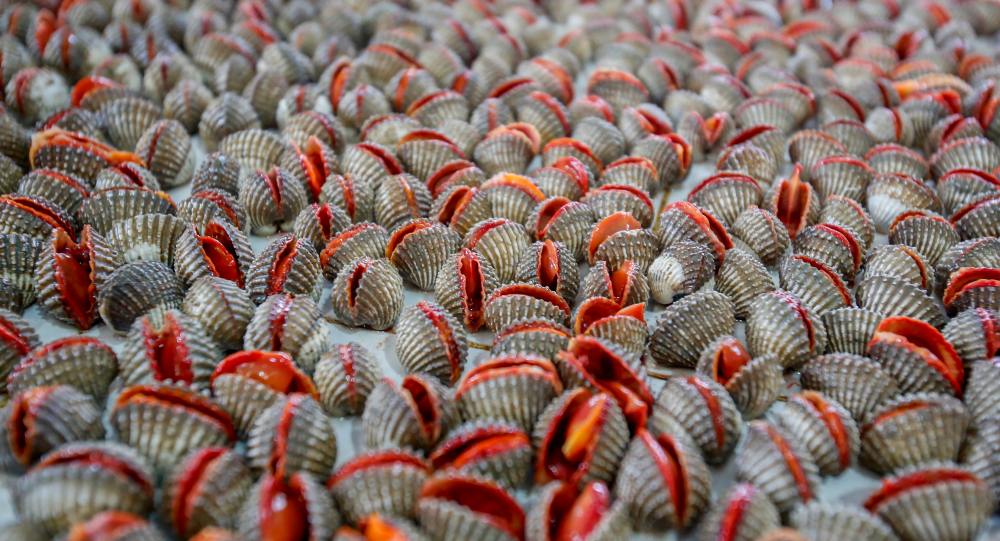
Consuming blood clams can carry a risk of hepatitis A.Image credit: adriefoto / Shutterstock.com
Hepatitis A spreads through feces so can wind up in waters pollute with human and beast waste , and irruption of the illness have beenconnected to the consumption of clams . There ’s no way of bonk just by looking at the origin - blood-red pulp of a raw blood clam if it ’s contaminated , and if you wipe out it , you could develop serious unwellness .
Perhaps the blood clam is better leave behind as food for the eyes .
